My experiences from Recent Technical Interviews
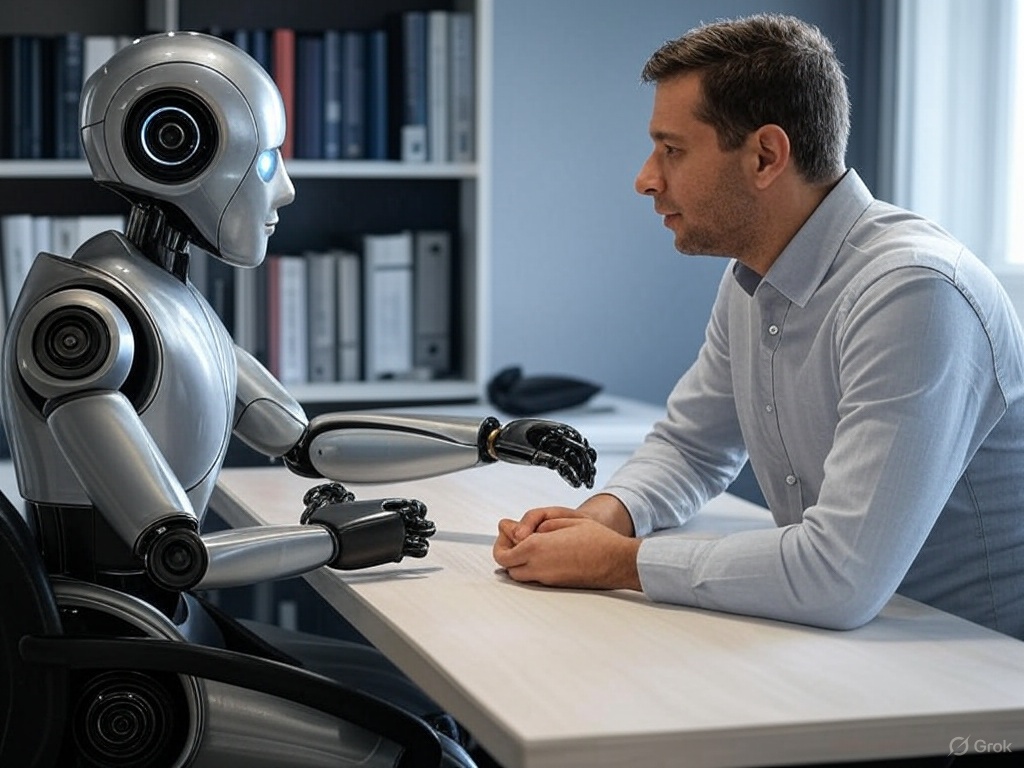
(Disclaimer — I wrote the article and then asked AI to rephrase it)
Our approach to technical interviews has always been unconventional. Instead of relying on standard algorithmic puzzles or trivia-based assessments, we focus on core technical concepts and evaluate whether candidates truly understand the "why" behind their work. If a candidate has not worked with a particular technology, that is not necessarily a negative. The key question remains: how well do they understand what they have worked on?
To assess this, we have developed a set of practical exercises designed to evaluate:
The candidate's ability to understand requirements in detail
Their proficiency in leveraging online resources effectively
Their capability to write functional and maintainable code
Their understanding of software architecture and code structure
These exercises are intentionally simple and focused, often involving basic insert/query operations in an existing database. There is no intent to extract free work; rather, the goal is to measure a candidate's problem-solving skills and depth of understanding.
Importantly, our exercise explicitly states that candidates are free to use ChatGPT or similar AI tools.
Observations from the Interview Process
Uniformity of AI-Assisted Code
The majority of submitted exercises exhibit striking similarities in structure, including class names, function names, variable names, indentation, and overall approach. The main variation is in the level of detail captured—some implementations include all required elements, while others miss key aspects.This strongly suggests that candidates rely heavily on AI-generated code without thoroughly reviewing or modifying it to ensure all requirements are met.
Difficulty in Differentiating Code and Binary Files
A specific requirement in our exercise is to submit only C# source code, without compiled binaries. Surprisingly, even candidates with over a decade of experience often fail to distinguish between source code and binary artifacts in their submissions. While AI tools may not assist in this particular step, the oversight indicates a lack of fundamental knowledge regarding software development processes.Inability to Modify Their Own Code
During interviews, candidates are asked to make simple modifications to their own code—such as adding an extra column in a result set or incorporating additional input fields into a form. In real-world scenarios, developers frequently modify existing codebases.Many candidates struggle with these basic changes, revealing a gap in comprehension. While they may have used AI-generated solutions effectively, their inability to adjust or extend their own code exposes a fundamental lack of understanding.
AI Tools vs. Conceptual Understanding
This aligns with observations from education professionals who argue that, just as elementary school students should first grasp mathematical concepts before using calculators, engineering students should develop a foundational understanding before relying on AI tools.The issue becomes evident in interviews—candidates who depend on AI to generate code often fail when asked to debug or enhance their own solutions.
Suspicious Online Interview Behavior
In online interviews, one candidate left their "speech-to-text" feature enabled. While it is unclear how this was being used, it became suspicious when they successfully modified code without any observable hand movement. This raises concerns about the increasing use of AI-assisted responses in real-time assessments.
The Challenge for Hiring Teams
The rise of AI tools like ChatGPT has made it easier for candidates to present polished solutions, but it has also made it more challenging for hiring managers to assess genuine expertise.
Some may argue that a candidate who effectively uses AI to complete an exercise should be considered capable of handling the job. However, this argument is flawed. The ability to complete a well-defined exercise with fixed requirements is fundamentally different from the ability to analyze real-world systems, extract necessary requirements, and adapt to evolving challenges.
Successful developers are those who can solve problems with or without AI tools because they possess analytical skills, domain understanding, and the ability to make sound decisions. The industry needs problem-solvers—not just tool users who struggle when AI-generated outputs are insufficient.
Conclusion
AI tools are valuable assets in modern software development, but they should complement, not replace, a developer’s understanding. Interview processes must evolve to differentiate between candidates who can truly analyze, design, and implement solutions versus those who merely act as intermediaries for AI-generated code. The goal should be to identify individuals who can think critically, adapt to changing requirements, and contribute meaningfully in real-world development environments.
Comments
Join the discussionNo comments yet. Be the first to comment.